
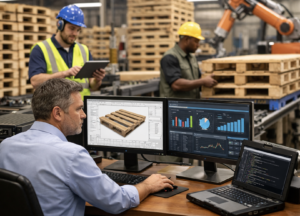
A modern Pallet Manufacturer cannot afford to think of IT as something optional, secondary, or only useful when a computer breaks. In today’s business environment, information technology touches scheduling, purchasing, inventory visibility, customer communication, billing, security, reporting, and long-term growth. Even the broader business and tech media landscape reflects how central these issues have become. Trusted outlets like Reuters Technology, AP Technology, and CIO News cover enterprise systems, cyber risk, cloud tools, AI adoption, and infrastructure because they now shape how companies compete.
For pallet companies, the need is especially important. Manufacturing businesses live on timing, coordination, efficiency, and trust. A delay in communication can affect orders. Poor data handling can create waste. Weak cybersecurity can put customer information, pricing, vendor records, and operations at risk. The companies that treat IT as a real business asset are often the ones that move faster, serve customers better, and make smarter decisions. The companies that ignore it often end up spending more later to fix preventable issues.
IT Is No Longer Just About Computers
When many business owners hear the term IT, they still picture office computers, printers, and internet service. In reality, IT is much broader than that. It includes the systems a company uses to create, store, manage, secure, and share information across the organization. That broad definition is one reason Wikipedia’s information technology overview remains useful as a basic reference, and it is why respected industry publications such as InformationWeek continue to cover IT as a strategic business issue rather than a simple support function.
For a pallet company, that can include order management, production planning, inventory software, barcode or tracking systems, cybersecurity tools, backup systems, email security, cloud file access, customer relationship software, and analytics that help leadership understand what is actually happening inside the business. Once owners see IT through that lens, the investment starts to make much more sense. It is not about buying gadgets. It is about building a stronger operating foundation.
Better IT Improves Daily Operations
A pallet business has moving parts everywhere. Quotes come in. Orders are placed. Materials are sourced. Production has to stay coordinated. Deliveries have to stay on track. Customers expect responsiveness. Vendors expect accuracy. Teams need access to the right information without confusion or delay.
Strong IT systems bring those moving parts together. Instead of relying on scattered spreadsheets, handwritten notes, or tribal knowledge, the business can centralize information. That creates fewer mistakes, better handoffs, and more visibility for the people making decisions. It becomes easier to track orders, manage deadlines, reduce duplicate work, and keep production aligned with demand.
This matters even more in an environment where enterprise technology keeps changing. Publications like TechCrunch Enterprise and Ars Technica routinely report on the tools and trends reshaping how businesses manage software, infrastructure, security, and automation. A pallet company does not need to chase every trend, but it does need enough IT maturity to make smart use of the right ones.
Cybersecurity Is a Real Manufacturing Issue
Many small and midsize manufacturers make the mistake of assuming they are too small to be targeted. That is dangerous thinking. Cybercriminals often look for businesses with weaker defenses, not just bigger names. A pallet company may store customer contacts, invoices, bank details, vendor records, pricing, payroll information, shipping data, and internal production documents. That is more than enough to create serious disruption if systems are compromised.
This is not just theory. The U.S. Cybersecurity and Infrastructure Security Agency identifies critical manufacturing as one of the nation’s critical infrastructure sectors, which shows how important secure operations are at the industry level. CISA also maintains specific ransomware guidance for organizations because attacks on operational businesses can create immediate financial and operational damage.
For a pallet manufacturer, a cybersecurity incident can mean locked files, delayed shipments, inability to invoice, damaged customer trust, and expensive downtime. Investing in IT helps reduce that risk through layered protections such as multifactor authentication, secure backups, endpoint protection, network monitoring, employee training, and clearer access controls. It is easier and less expensive to build defenses now than to rebuild trust after an incident.
Downtime Costs More Than Most Companies Realize
When systems go down, work slows down. Sometimes it stops completely. Phones may still ring, but teams may not be able to retrieve order details, check inventory, send invoices, confirm schedules, or access files. Even short interruptions can create a chain reaction that affects production, delivery windows, and customer relationships.
That is why IT investment is not just about innovation. It is about resilience. Reliable backups, modern hardware, secure networks, monitored systems, and disaster recovery planning help a business recover faster when something goes wrong. CISA’s ransomware resources and NIST’s small business cybersecurity materials both emphasize practical planning and risk reduction for organizations that may not have deep internal tech teams.
A pallet company that depends on speed and consistency cannot afford to leave recovery to guesswork. The more organized the IT environment is, the less a single disruption can throw the company off course.
IT Helps Leadership Make Better Decisions
One of the biggest hidden benefits of IT is visibility. Many owners feel overwhelmed not because the business is failing, but because they do not have clean, reliable information in front of them. They know money is moving. They know production is happening. They know there are pressure points. What they do not always have is a clear system that turns activity into useful insight.
Good IT changes that. It can show which customers are most profitable, where delays keep happening, how long it takes to move orders through production, where communication breaks down, what inventory issues are recurring, and which parts of the operation need attention first. Better information leads to better decisions. Better decisions lead to healthier margins, stronger service, and more confident growth.
This is one reason IT leadership publications remain focused on business value, not just tech features. CIO consistently frames technology as a driver of operational and strategic value, while InformationWeek continues to cover how IT choices affect risk, efficiency, and enterprise performance.
Modern IT Supports Growth Without Chaos
Growth sounds exciting until the systems underneath the business start straining. A pallet company may add customers, increase output, expand service territory, or hire more people, but if its systems remain disorganized, that growth can create confusion instead of momentum. Orders get missed. Communication gets slower. Records become harder to manage. Small issues become expensive ones.
Investing in IT early helps prevent that. Scalable systems make it easier to onboard staff, manage permissions, store files consistently, standardize workflows, and keep communication cleaner as the company gets bigger. It also positions the company to adopt the right tools over time rather than scrambling to patch problems after they become urgent.
NIST’s guidance for small and midsize organizations is especially helpful here because it shows that practical cybersecurity and governance do not have to be overwhelming. The goal is not perfection. The goal is a stronger, more disciplined foundation that can support real-world growth.
Zero Trust and Access Control Matter More Now
Many manufacturers still operate with broad, informal access to systems and files. Employees may share logins, use weak passwords, or keep sensitive documents in places that are far too open. That may feel convenient in the moment, but it creates unnecessary risk.
NIST describes zero trust as a security approach that removes implicit trust based only on network location or device ownership. In simple terms, that means a company should verify users and devices more carefully before allowing access to sensitive resources. That principle is increasingly important for businesses using cloud software, remote access, mobile devices, vendor portals, and shared data environments.
A pallet company does not need to become a giant enterprise to benefit from that mindset. It simply needs to be more intentional. The right people should have the right access at the right time, and no more than that. That protects the business without making operations harder.
Customers and Partners Notice Operational Maturity
IT investment also affects how others view the company. Customers want confidence. Vendors want reliability. Partners want smoother communication. When a pallet company has organized systems, secure communication, faster response times, and consistent recordkeeping, it sends a message that the business is serious, dependable, and prepared.
That matters in competitive markets. Buyers are not only comparing price. They are also comparing responsiveness, trust, consistency, and ease of doing business. Good IT supports all of those things behind the scenes. It strengthens reputation without needing to brag about it.
Conclusion
A pallet company should invest in IT because IT now sits at the center of efficiency, protection, communication, resilience, and growth. It helps reduce mistakes, protect data, support production, improve visibility, and build trust with customers and partners. It also gives leadership better control over the business instead of forcing them to manage by instinct alone.
In a market where operational discipline matters, IT is not a luxury. It is part of what helps a pallet manufacturer stay reliable, competitive, and ready for the future. The businesses that recognize that today are the ones that put themselves in a stronger position for tomorrow.